Red gates on an e-bike is the kind of combo that makes Kyoto feel fresh again. This private ride takes you from Kyoto Station out through quiet streets to Fushimi-Inari-taisha, with an English-speaking guide who keeps things moving and explains what you’re seeing as you go. You’ll also add in two major temple stops, then cruise back along the calm Kamo River for a gentler end to the day.
I really like two things about this tour. First, you get built-in time at Sanjusangendo, where the guide walks you inside and helps you understand what you’re looking at (and yes, it’s famous for the thousand Buddhas). Second, the practical setup is handled for you: helmet, rain poncho, a cycling map, and accident insurance, so you can focus on the sites instead of logistics.
One drawback to plan around: the tour operates in rain. You’ll get a poncho, but you still need to feel comfortable riding on wet roads for the full 3 hours 30 minutes.
In This Review
- Key points worth your attention
- Getting rolling from Kyoto Station without fighting traffic
- What I’d bring (so rain doesn’t ruin your mood)
- Stop 1: The Nintendo Original Building spotting game
- Sanjusangendo Temple: 1 hour inside the thousand-Buddha halls
- A practical tip for enjoying the time
- Tofuku-ji Temple: quiet Zen calm with a photo-friendly pause
- Fushimi-Inari-taisha: walking the torii paths with real context
- Why cycling helps with crowds
- Guide styles you’ll likely appreciate
- Kamo River ride back to Kyoto Station: the calm ending you’ll remember
- Price and value: why $111.05 can work (if you’ll use the time well)
- Who this private e-bike tour fits best
- Should you book this Fushimi-Inari e-bike tour?
- FAQ
- How long is the private e-bike tour?
- What does the price include?
- Is this tour private, and what group size is allowed?
- Does the tour run in rain?
- What are the age and height requirements for children?
- What is the cancellation policy?
Key points worth your attention
- Private guide + mobile ticket: just your group, with a guide who stays with you through the main stops.
- Sanjusangendo with guided context: you’re not just walking halls—you’re getting the meaning behind them.
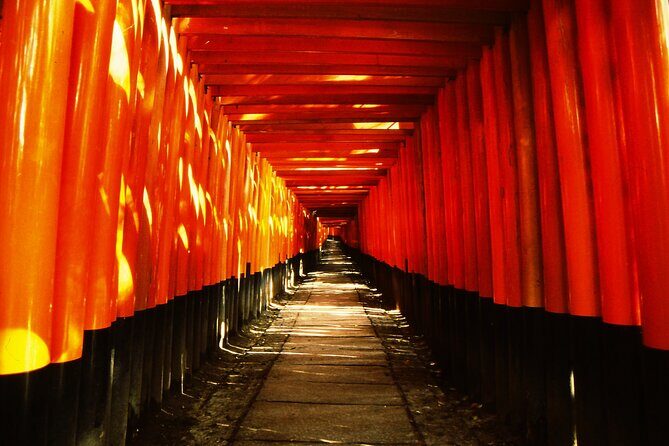
- Fushimi-Inari torii paths at a slower pace: you can walk the famous red gates with explanations instead of guessing.
- A calmer return route by the Kamo River: wildlife and nature help reset your brain after temples.
- Rain is included, not optional: poncho and helmet are provided, so you’re not stuck without gear.
Getting rolling from Kyoto Station without fighting traffic
You start and finish where it’s easiest: Kyoto Cycling Tour Project at the Kyoto Station cycle terminal. That matters because Kyoto’s best walking areas can also be time sinks. By switching to an e-bike for the between-site travel, you cover ground faster and spend more time where it counts—at the shrines and temples.
Your guide stays with your group the whole time, and the tour is designed around a steady rhythm: short rides between stops, then slower, more human-paced visits at each place. The route also favors the kind of side streets and smaller lanes where bikes make sense. That’s a big part of why this works as a 3.5-hour experience instead of turning into a half-day in transit.
Other cycling tours in Kyoto


What I’d bring (so rain doesn’t ruin your mood)
You’re given a rain poncho, but consider adding your own light layers and a small bag that can handle damp conditions. There are no snacks included, so if you’re the type who gets hungry during temples, pack something small for yourself before you meet up.
Stop 1: The Nintendo Original Building spotting game
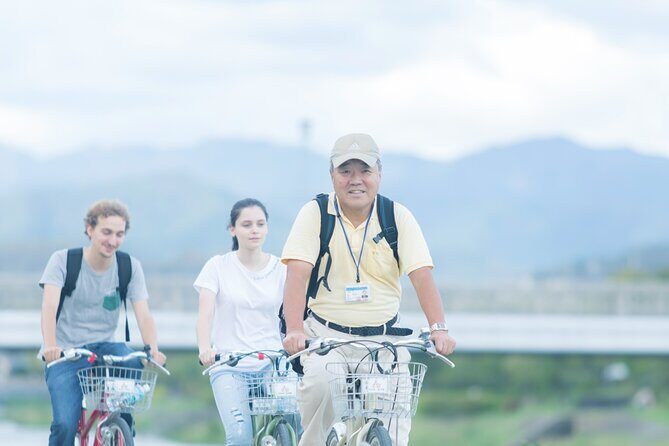
The tour begins with a quick cycle past the former offices tied to one of Kyoto’s well-known companies, stopping briefly at the Nintendo Original Building area. It’s only about 10 minutes, and there’s no paid entry.
Think of this stop as a warm-up. It helps you get oriented in the area near Kyoto Station and gives the guide an easy opener—how the city’s business side and its historic side overlap in real life. It also breaks up the ride so you’re not immediately jumping from bike-seat to temple.
If you’re hoping for a full museum-style visit, don’t plan on it. This is more about context and location than a deep stop.
Sanjusangendo Temple: 1 hour inside the thousand-Buddha halls
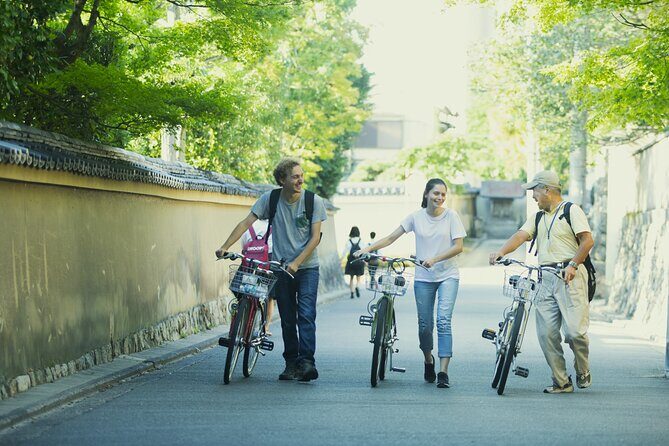
The biggest “slow down” moment comes at Sanjusangendo Temple (Sanjusangendo). The guide accompanies you inside and explains the history and significance, and you’ll have about an hour on-site with admission included.
Here’s why this stop is so valuable on a bike tour: it forces balance. Kyoto can hit you with back-to-back sensory overload—shrines, gates, crowds, camera angles. Sanjusangendo is different. The hall setting is focused. You’re walking through long, age-old corridors where your attention locks onto the statues and the scale of the place.
It’s also a strong choice if you’re traveling with family. In the past, guides like Tibor were noted for being patient with kids and still keeping the experience fun, not just formal.
A practical tip for enjoying the time
Don’t rush your viewing. Give yourself a couple of passes—first to take in the overall layout, then to slow down where the details catch your eye. The guide can help point you toward what matters so you don’t spend the hour only hunting for the perfect photo.
Other private tours in Kyoto


Tofuku-ji Temple: quiet Zen calm with a photo-friendly pause
Next you’ll head to Tofuku-ji Temple for a shorter stop—around 15 minutes, with admission not required for this brief time. The idea here is quick, peaceful contrast. It’s a Zen temple, and even in a short visit you can feel the difference in pace from the more famous gate pathways.
Because the time is limited, it’s best for travelers who like “micro-moments”: a few good angles, a moment to breathe, and then back to cycling. If you’re someone who could spend hours inside a single temple complex, you’ll probably want extra time later on your own.
Still, as part of a 3.5-hour private tour, this stop makes the schedule feel less like a checklist and more like a curated route through Kyoto’s mood.
Fushimi-Inari-taisha: walking the torii paths with real context
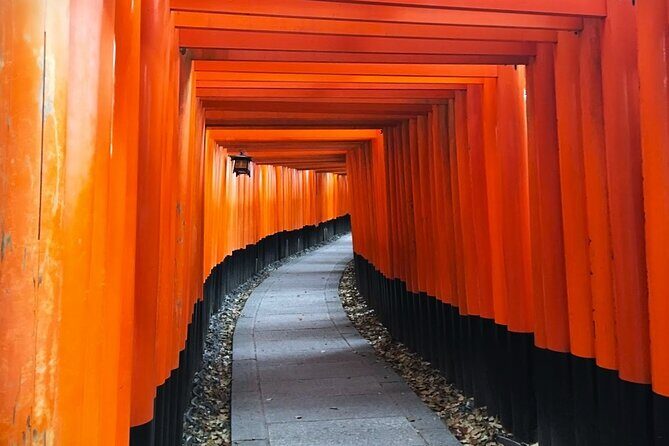
Then comes the star of the show: Fushimi Inari-taisha Shrine and its famous red torii gates. You’ll spend about an hour here, with the guide taking you along the thousand-gate paths and explaining what the shrine represents as you walk.
The practical advantage of having a guide at Fushimi-Inari is simple: you stop guessing. Instead of treating every gate like the same photo opportunity, you start to notice the meanings behind the route—how the place is structured and why it’s laid out the way it is. You can still wander and take photos, but you’re anchored by explanations.
Why cycling helps with crowds
Fushimi-Inari can feel busy, especially around the busiest stretches. This tour is built to help you avoid the worst crowd crush by mixing in ride time, planned stops, and a pace that doesn’t force you to stand still for long stretches. You’re moving when you need to move, and slowing down when it matters.
Guide styles you’ll likely appreciate
Different guides bring different energy. Kaz has been praised for warmth and humor while connecting history to what you see. Kas was described as bringing the sites to life in a way that feels fun, not stiff. JJ and Y Yagyu have also been highlighted for being kind, upbeat, and great at keeping the group moving at a comfortable speed.
You can treat this as a “make the shrine make sense” stop, not just a dramatic walk through red gates.
Kamo River ride back to Kyoto Station: the calm ending you’ll remember
After the shrine, you return by bike along the Kamo River embankment. This part is about breathing space. The tour description specifically calls out nature and wildlife, and that’s exactly the point: you’ve spent time in sacred spaces, now you get a lighter, scenic finish.
This stretch also helps you reset after Fushimi-Inari. Temple paths can be mentally intense—especially if you’re taking in stories, signage, and crowds. The river ride brings you back to a Kyoto you can feel more than memorize.
And because your return ends right back at the meeting point near Kyoto Station, you don’t have to worry about a confusing handoff. You’re done in time to grab dinner or continue sightseeing without hunting for transport.
Price and value: why $111.05 can work (if you’ll use the time well)
At $111.05 per person for about 3 hours 30 minutes, this is not the cheapest way to see Kyoto. But it also isn’t meant to be. The value comes from three places:
- You’re paying for time saved and effort reduced. A private guide plus bike logistics means less navigating between major sites.
- You’re paying for guided access at key moments. Sanjusangendo includes time inside with the guide accompanying you and explaining significance. That’s not the same as a self-guided walk.
- You’re paying for weather resilience. Rain poncho, helmet, and accident insurance reduce stress. If Kyoto rain happens (and it often does), you’re not scrambling.
If your style is self-guided wandering and you love planning every route yourself, you might decide to DIY. But if you want a smooth, story-led circuit with minimal friction, the price starts making sense.
Who this private e-bike tour fits best
This works especially well if you:
- Want a 3.5-hour structured experience without giving up freedom.
- Prefer biking between sights instead of doing everything on foot.
- Appreciate a guide who can explain what you’re seeing while keeping things relaxed.
- Like a quieter ending, not just another temple.
It may not be ideal if:
- You’re traveling solo, since the minimum group setup requires at least 2 guests per guide and 1-person participants aren’t accepted.
- You dislike cycling on roads in wet conditions, since the tour runs in rain.
Should you book this Fushimi-Inari e-bike tour?
I’d book it if you want Kyoto’s best-known shrine experience—torii gates at Fushimi-Inari—plus a serious temple stop like Sanjusangendo, all stitched together with practical bike travel and an English-speaking guide. It’s a smart way to see more without feeling rushed, and the Kamo River ride makes the day feel balanced.
I’d skip it if you prefer total independence, plan to spend many hours at one site, or are worried about rain cycling. If you can handle a steady ride and you like being guided through sacred spaces, this is a strong value pick for a single half-day.
FAQ
How long is the private e-bike tour?
The tour is about 3 hours 30 minutes, including the time spent cycling between locations.
What does the price include?
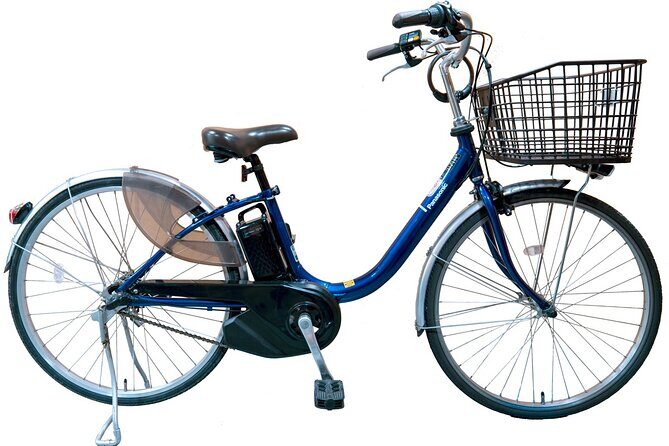
It includes use of the bicycle, helmet, rain poncho, a licensed or certified English-speaking guide, an original cycling map, accident insurance, and admission where listed (Sanjusangendo has admission included; other stops like Tofuku-ji and Fushimi Inari are marked as free in the itinerary).
Is this tour private, and what group size is allowed?
Yes, it’s private—only your group participates. The minimum is 2 guests and the maximum is 6 guests per guide. If your group is 7–12, an extra guide can be arranged with no extra fee.
Does the tour run in rain?
Yes. The tour will operate in rain.
What are the age and height requirements for children?
Children must be at least 10 years old, 145 cm or above, and able to ride a bicycle safely on the road unassisted.
What is the cancellation policy?
This experience is non-refundable and cannot be changed for any reason. If it’s canceled because the minimum number of travelers isn’t met, you’ll be offered a different date/experience or a full refund.