One day, two old capitals. What makes this tour work is the private car and a local English/Japanese guide who helps you understand what you’re looking at, not just where to go. I love the comfort of having hotel pickup and drop-off handled, and I love the safety-first approach with a licensed Japanese driver. The tradeoff: it’s a packed route, so many stops are quick, and you’ll still want to budget for entrance tickets and optional paid add-ons.
You’ll also get real local problem-solving. The guides are Japanese-born and raised, and the operator highlights extra Japanese language support in case of emergencies, which is a big deal when you’re far from home and juggling a tight schedule.
The itinerary is broad for a reason. You’ll cover Kyoto icons like Fushimi Inari and Kinkaku-ji, then push on to Nara’s deer park and Todai-ji, with scenic detours like Amanohashidate and Ine no Funaya boathouses. It’s customizable, and you can even choose your car, but that also means you’ll need to come ready for a long, full day.
In This Review
- Key highlights you’ll feel right away
- Why a private Kyoto-and-Nara car day beats trains
- Your guide: English, Japanese, and the local context you actually want
- Safety and the “real driver” factor in Kyoto traffic
- Kyoto morning: Fushimi Inari-taisha’s torii gates
- Arashiyama basics: bamboo forest, Tenryu-ji, and Togetsukyo views
- Arashiyama add-ons: Kimono Forest, Sagano train, and Monkey Park
- Gion and the Golden Pavilion: Kyoto’s classic tradition hits
- Nishiki Market and Kiyomizu-dera: food shopping plus big views
- Ginkaku-ji, Yasaka Shrine, Sanjusangendo, and Chion-in in one rhythm
- Nijo Castle: Kyoto’s shogun residence feeling
- Countryside stops: Amanohashidate and Ine no Funaya boathouses
- Nara finale: deer park, Todai-ji, and lantern shrines
- Price and logistics: what you truly get for $459.81
- How to prepare for a long, packed day (without burning out)
- Should you book this Kyoto and Nara private car tour?
- FAQ
- How long is the Kyoto and Nara private car tour?
- What does the tour cost?
- Is hotel pickup and drop-off included?
- Is Wi-Fi available during the tour?
- Is this a private tour?
- Are entrance fees included?
- Are meals included?
- Are gas, parking, or highway fees included?
- What language support do you get?
- Can I get a car upgrade?
Key highlights you’ll feel right away
- Private group car (up to 13) so you’re not herding people through stations
- Local English/Japanese guide with emergency Japanese language support
- Licensed Japanese driver focus with a safety-first mindset
- Kyoto + Nara in one day, plus scenic countryside stops
- Paid add-ons are optional at a few iconic spots
- Entrance fees and a ¥10,000 cash driving cost should be planned for
Why a private Kyoto-and-Nara car day beats trains
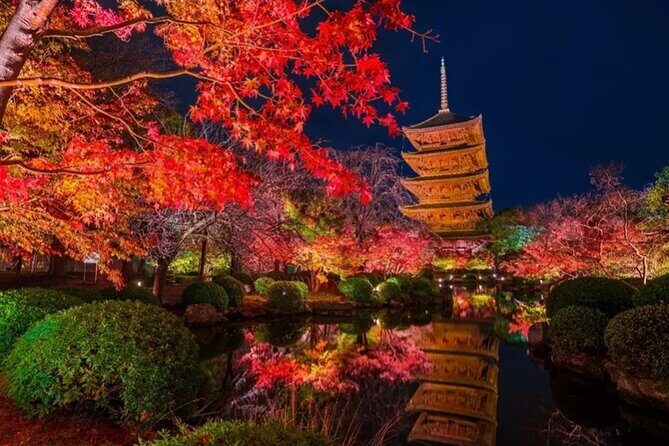
Kyoto and Nara are doable by public transit, but doing both in one day is where stress can quietly pile up. A private vehicle changes the math. You start with hotel pickup, you ride in an air-conditioned car, and you don’t spend your day decoding platforms, transfers, and taxi lines.
I also like that the experience is built around your group, not around fixed crowd flow. It’s a private tour, meaning it’s only your group in the car, and you can move at a pace your guide can manage. Wi‑Fi on board helps for last-minute ticket timing, maps, or translating directions when you’re out of signal.
Value is the other big win. The price is $459.81 per group up to 13. If you’re a small group, it’s still a premium day, but if you fill a bigger group, your cost per person drops a lot compared with booking separate rides or guides for each person.
A few more Kyoto tours and experiences worth a look
Your guide: English, Japanese, and the local context you actually want
This tour’s strongest ingredient is not the car. It’s the people running the storytelling. You’ll have an experienced local guide fluent in both English and Japanese, and the operator notes that some guides have professional guiding experience reaching well beyond normal tourist groups (they specifically mention experience guiding Hollywood actors like Lance Gross).
In plain terms, that means less time wasted on basic facts and more time on the why behind the place. When you’re at a shrine, a temple, or a historic district, context matters. You want to know what you’re seeing, what to notice, and what to ignore so your photos and memories match reality.
You may also see familiar names tied to the service. For example, guides named Yama and Hibiki show up in past feedback, and both are described as speaking English well and making the day feel smooth. Even if you don’t get those specific guides, the expectation is the same: clear communication, friendly guidance, and a “you’re taken care of” feeling.
One more practical plus: the operator offers complimentary support for Shinkansen and restaurant reservations. That doesn’t replace planning your itinerary, but it can help you make smart next steps after this day ends—especially if you’re continuing deeper into Japan.
Safety and the “real driver” factor in Kyoto traffic
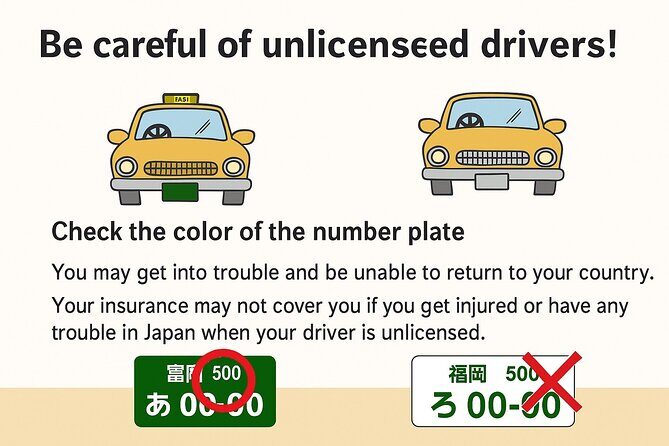
Kyoto traffic can surprise you if you’re used to driving in quieter places. This tour addresses that directly by pairing you with a professional licensed driver. The description also calls out a “green number” driver system, which signals that you’re not relying on someone who’s unfamiliar with local rules and road rhythms.
Safety is the headline, and it shows up in feedback too. People singled out the experience as smooth and confidence-building, especially for families and anyone who doesn’t want the added stress of navigating trains, taxis, and long walking legs between major sights.
The one thing to keep realistic: a private car can reduce stress, but it can’t compress physics. You’ll still travel between Kyoto and Nara areas, and you’ll still do short stop-and-go visits. Plan for a full day where your body needs to keep up.
Kyoto morning: Fushimi Inari-taisha’s torii gates
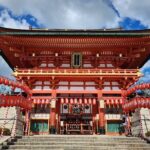
Your day starts at Fushimi Inari-taisha, Kyoto’s most recognizable shrine for a reason. It’s famous for the Senbon Torii—thousands of red torii gates that climb into the wooded slopes. Even in a short visit, the setting hits fast: color, rhythm, and that tunnel-like feeling as you move through the gates.
This is one of those stops where timing and expectations matter. You’ll likely have around 15 minutes here, so you won’t do a full deep walk up and out. Instead, your guide can help you pick a route that gives you the signature torii experience without turning the stop into a marathon.
A possible drawback: crowds and steps. Fushimi Inari can be busy, and there are stairs and uneven footing. If your group has mobility limits, tell the guide at the start so they can adjust the path and keep the visit comfortable.
Arashiyama basics: bamboo forest, Tenryu-ji, and Togetsukyo views
Next comes Arashiyama, Kyoto’s west-side district for nature-focused sightseeing and classic temple scenery. Your highlights here include the Bamboo Forest walkway and nearby icons that make the area worth the trip.
The bamboo forest is the big visual. Tall stalks form a roof overhead, and the walk feels like a photoshoot that you walk through rather than a view you stand at from far away. You’ll get a short window here, so expect quick positioning and moving with the crowd flow.
From there, you may pass by or stop for Tenryu-ji Temple, a UNESCO World Heritage site known for traditional gardens and architecture. Entrance fees are not included, so you’ll want to treat this as a “good to know” moment: your guide may use time to align your visit with how you feel about paying admission versus just seeing exteriors.
Then there’s Togetsukyo Bridge over the Katsura River. This is a simple stop that often pays off because it gives you a wide view and a clean photo frame. If you go when seasonal color is strong, your guide can point out the angles that usually work best.
Other guided tours in Kyoto


Arashiyama add-ons: Kimono Forest, Sagano train, and Monkey Park

Arashiyama isn’t only temples and bamboo. It also includes modern photo moments and optional activities if your group wants something different.
Kimono Forest is a striking installation near Arashiyama Station, with hundreds of pillars wrapped in colorful kimono fabric designs. It’s a fast stop, but it’s fun because the vibe is playful compared with the heavier temple sites.
If your group likes something more “experience-based,” you’ll also have optional time at Sagano Romantic Train (Sagano Torokko Train). This is not included, but it can turn the Arashiyama portion into a break that feels like a mini adventure rather than another walking circuit.
Another optional stop is Monkey Park Iwatayama, where you climb a short mountain trail to meet wild Japanese macaques and view Kyoto from higher ground. It’s not included, and it involves a climb. If anyone in your group feels cautious with stairs or uneven trails, this is the kind of stop you should discuss upfront so you don’t end up with half the group waiting and stressed.
Gion and the Golden Pavilion: Kyoto’s classic tradition hits

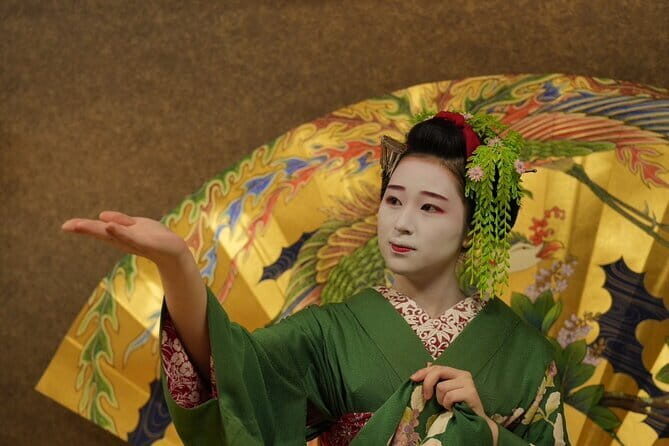
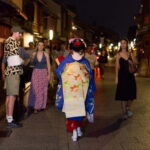
After Arashiyama, the tour shifts back to Kyoto’s older districts. Gion is where you get the traditional-district atmosphere and the famous geisha and maiko culture area. You’ll likely stroll around areas like Hanami-koji Street and the Shirakawa Canal corridor, where the streets and water channels create that “Kyoto postcard” feeling.
This is also where you learn to see respectfully. Gion is a working district, and the best experience is watching quietly and not treating it like a theme park. Your guide can help you understand the etiquette so you don’t feel awkward.
Then you move to Kinkaku-ji, the Golden Pavilion, a UNESCO World Heritage site and one of Kyoto’s most famous temple sights. Entrance is not included, so you’ll want to decide with your guide whether you want to prioritize the inside experience or make sure you still have time for the next parts of the day.
Nishiki Market and Kiyomizu-dera: food shopping plus big views

Nishiki Market is often called Kyoto’s Kitchen, and with good reason. It’s packed with small shops and stalls, and it’s known for the variety of local food and snacks. In a short stop, you can still do something valuable: sample a few items, buy small gifts, and feel the everyday flavor of the city.
Plan for it to be a quick pass. The market stop is brief, so don’t expect deep browsing of everything. If you tell your guide what you like—savory, sweet, pickles, or ready-to-eat treats—they can guide you to shops that match your tastes.
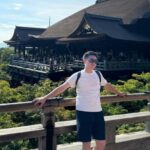
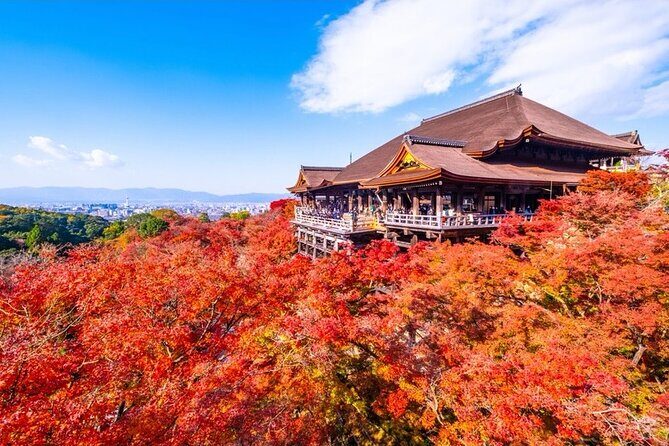
Next is Kiyomizu-dera, a UNESCO World Heritage temple famous for the large wooden stage called Kiyomizu no Butai. This is a stop that tends to feel bigger than the time on the clock because the viewpoint and the temple structure pull you in.
Entrance is not included, and the grounds involve stairs and uneven slopes. If it’s raining, you’ll want traction. If it’s hot, hydration matters. Tell your guide early how your group feels, because this stop is the kind that can either be a highlight or a slog depending on conditions.
Ginkaku-ji, Yasaka Shrine, Sanjusangendo, and Chion-in in one rhythm
The middle of the day is where your route becomes a “temples and shrines” sampler platter, but it’s organized for a reason: variety without backtracking.
Ginkaku-ji, the Silver Pavilion, is a Zen temple known for refined simplicity and moss garden aesthetics. You’ll see why it’s respected for calm design even without the silver you might expect from the name. Entrance fees are not included, so you’ll likely focus on what you can see efficiently and decide whether to pay based on your group’s interest.
Yasaka Shrine sits between Gion and Higashiyama, and it’s known for its lively setting and lantern-lined feel. It’s a nice contrast point after the more architectural temple stops.
Sanjusangendo (Rengeo-in) is a standout for scale. The long wooden hall stretches about 120 meters and is famous for housing 1,001 life-size statues. Entrance isn’t included, but even if you don’t go inside for the full experience, the place is worth understanding in context.
Then comes Chion-in, the head temple of the Jodo sect of Buddhism. The massive Sanmon Gate is one of the biggest wooden gates in Japan, and it’s a dramatic “big entrance” moment that helps reset your senses before the tour shifts toward Nara.
Nijo Castle: Kyoto’s shogun residence feeling
Nijo Castle is a UNESCO site built as a residence for shogun Tokugawa Ieyasu. It gives you a different lens on power and architecture compared with shrines and garden temples. You’ll get palace buildings, gardens, and the feel of a formal compound rather than a single landmark photo point.
Entrance isn’t included, so treat it as optional based on energy. If your group is temple-stable and likes architectural interiors, it can be a good use of time. If you’re already running on day-energy, focus on the exterior approach and let your guide manage the pacing.
Countryside stops: Amanohashidate and Ine no Funaya boathouses
Here’s where the day expands beyond “city blocks.” You’ll stop at Amanohashidate, one of Japan’s Three Scenic Views. It’s a 3.6-kilometer sandbar known as the Bridge to Heaven, with nearly 5,000 pine trees lining the view area.
There’s also an Amanohashidate View Land stop, which helps you get the sweeping look without needing a long walk. Entrance isn’t included, so you’ll again rely on your guide’s advice on where to invest time.
Then the tour includes Ine no Funaya, a picturesque fishing village known for funaya boathouses—traditional wooden houses built directly on the water, with the first floor serving as boat storage. This is a very different visual from Kyoto shrines. It gives you a real sense of life tied to the bay, not just sightseeing.
Practical note: countryside weather changes faster than city neighborhoods. Bring layers, and if motion makes you queasy, mention it to the driver early so comfort can be managed.
Nara finale: deer park, Todai-ji, and lantern shrines
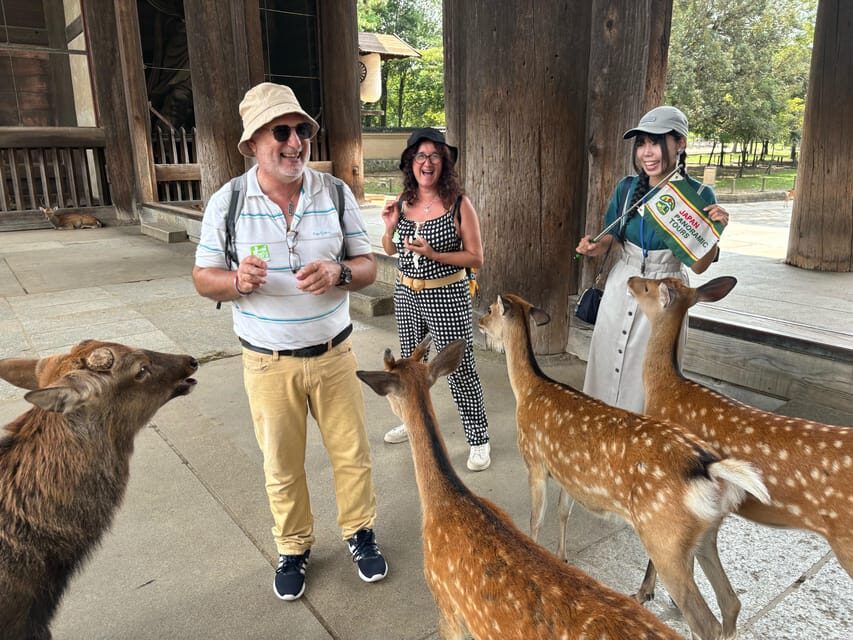
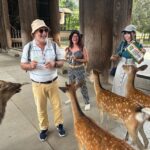
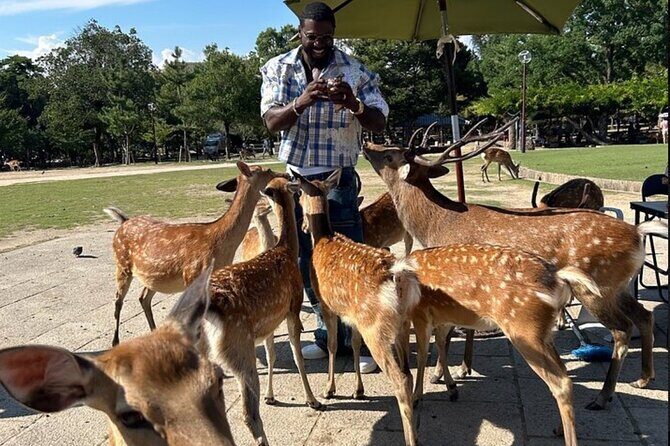
Nara Park is where you see one of Japan’s most iconic “wildlife meets culture” moments: over 1,000 freely roaming deer across the park. It’s not just a photo opportunity. It sets the tone for Nara’s slower, more open feel compared with Kyoto’s tight lanes.
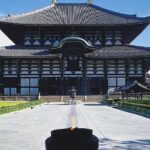
Next is Todai-ji Temple, a UNESCO World Heritage site and home to the Great Buddha Hall (Daibutsuden). This is the big, historic centerpiece stop in Nara. Entrance isn’t included, and if your group is a “see the interior” type, you’ll want to plan time and energy so you don’t feel rushed.
Kasuga Taisha Grand Shrine is another UNESCO highlight, founded in the 8th century and known for hundreds of bronze and stone lanterns. If you’ve enjoyed lantern details in other parts of Japan, this is the place that turns them into a core visual identity.
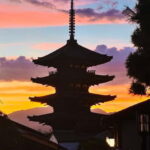
Finally, you may visit Kofuku-ji Temple’s five-story pagoda area. It’s one of Nara’s older and more important Buddhist sites. Like the others, entrance fees are not included, so your guide will likely help you decide what matches your remaining energy at that point in the day.
Price and logistics: what you truly get for $459.81
Let’s talk value without pretending it’s cheap or pretending it’s free. The tour is priced at $459.81 per group up to 13, for a roughly 10-hour day.
You’re paying for three main things:
- A local English/Japanese guide who can interpret what you’re seeing
- A private, air-conditioned car with a professional licensed driver
- Hotel pickup/drop-off plus Wi‑Fi and mobile ticket support
Included also includes complimentary support for Shinkansen and restaurant reservations. If you’re traveling between cities, that kind of help can save time later.
What’s not included matters for budgeting:
- Entrance fees to temples and shrines
- Meals
- Gas, parking, and highway fees paid in Japanese yen cash on the tour day: ¥10,000.00 per booking
So I’d treat the base price as the cost of the guided transportation and expert routing, then add a realistic extra day budget for tickets and that ¥10,000 cash driving cost.
How to prepare for a long, packed day (without burning out)
This itinerary is broad: Kyoto icons, Arashiyama, multiple temple and shrine sites, plus Nara and scenic countryside stops. Even if many individual stops are brief, the travel and waiting time add up.
Here’s what I’d do to make it feel enjoyable:
- Wear comfortable shoes because multiple stops involve walking, stairs, or uneven surfaces.
- Bring a small amount of cash for the extra ¥10,000 driving costs and any entrance fees.
- If anyone in your group has limits, tell the guide at pickup so they can adjust the stops like Sagano train or Monkey Park Iwatayama.
- Keep meals flexible. Since meals aren’t included, you’ll want to ask your guide for practical timing based on where the day is when hunger hits.
The upside is that you’ll see a lot of Kyoto and Nara without spending the day in transit friction.
Should you book this Kyoto and Nara private car tour?
I’d book this if you want one guided day that covers Kyoto’s biggest hits and Nara’s must-see core, while minimizing logistics stress. It’s a strong fit for families, multigenerational groups, and anyone who’d rather spend time looking around than figuring out trains and getting separated.
It’s also a good option if you care about interpretation. The guide experience and the safety-focused driver setup are the reasons this works.
I’d skip or reconsider if you’re the type who wants slow, unhurried exploration at each temple, because a 10-hour day with many stops means shorter visits. And if your group hates extra costs, remember entrance fees and optional paid add-ons will land on top of the base price.
If you’re aiming for a full “best of” day with real local guidance, this is the kind of tour that makes the effort feel organized instead of exhausting.
FAQ
How long is the Kyoto and Nara private car tour?
The tour is approximately 10 hours.
What does the tour cost?
It costs $459.81 per group, up to 13 people.
Is hotel pickup and drop-off included?
Yes, hotel pickup and drop-off are included.
Is Wi-Fi available during the tour?
Yes, Wi-Fi is provided on board.
Is this a private tour?
Yes. It’s private, and only your group participates.
Are entrance fees included?
No. Entrance fees are not included.
Are meals included?
No. Meals are not included.
Are gas, parking, or highway fees included?
No. Gas, parking, and highway fees are ¥10,000.00 per booking paid in Japanese yen cash on the tour day.
What language support do you get?
You get an experienced local guide who speaks English and Japanese, plus additional Japanese language support in emergencies.
Can I get a car upgrade?
Yes. A Mercedes-Benz V-Class is listed as a higher-cost VIP option.