A good walk can change how you see Kyoto. This private Fushimi Inari hike trades the crowded lines for quieter paths, plus clear storytelling about Shinto and local history. You’ll also get standout photo moments along the orange-red torii lanes.
I especially liked the undivided attention of the guide, which makes the route feel smooth and prevents the usual wandering. I also love that you’re not just walking past sights: you get narration on Japanese culture, history, and Shintoism as you go. One thing to consider is the hike is still a hike, so it’s best if you’re comfortable with moderate physical activity for about 3 hours.
In This Review
- Key highlights worth your time
- Why the private route matters at Fushimi Inari
- Meeting point, timing, and how the 3 hours flows
- Stop on the way up: Tofuku-ji views before the shrine climb
- Entering Fushimi Inari: vermilion torii, bamboo, and Senbon Torii
- The quieter Mt. Inari hike and Shinto explanations on the way
- Approaching the main shrine area without the usual scramble
- Coming back down with Fushimi Momoyama Castle views
- DSLR photos included: when to use them and why it’s worth it
- Price and value: does $62.26 make sense for this private hike?
- Who this Kyoto Fushimi Inari hike is best for
- Practical tips so your hike goes smoothly
- Should you book this hidden hike at Fushimi Inari?
- FAQ
- How long is the private Kyoto Fushimi Inari Hidden Hike?
- What is the meeting point for the tour?
- Where does the tour end?
- What time does the tour start?
- How much does the tour cost?
- Is this tour private or shared?
- What is included in the tour?
- Is admission included?
- Is food or drink included?
- What if the weather is bad?
- Is there free cancellation?
Key highlights worth your time
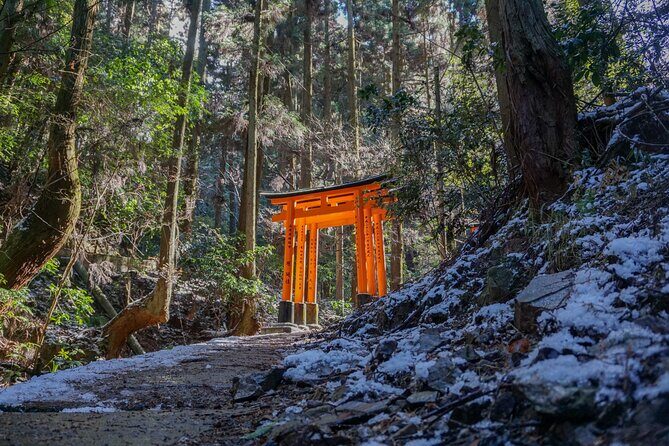
- Quiet Mt. Inari trails that feel more personal than the main crush of visitors
- Vermilion torii gates to Senbon Torii with guide-led photo timing
- Tofuku-ji views on the way up, framed as one of Kyoto’s Five Great Zen Temples
- Shinto context in plain language, including what you’re seeing and why it matters
- DSLR photos included, shared after the tour (a big quality-of-life perk)
Why the private route matters at Fushimi Inari
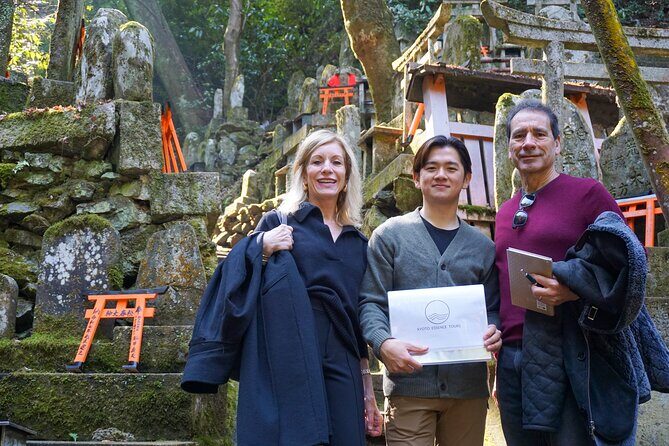
Fushimi Inari Taisha is the kind of place where everyone arrives with the same plan: torii gates, photos, done. A private guide turns that into a calmer experience, because you’re not stuck following the loudest traffic flow. Instead, you step aside onto quieter trails near Mount Inari and keep moving with purpose.
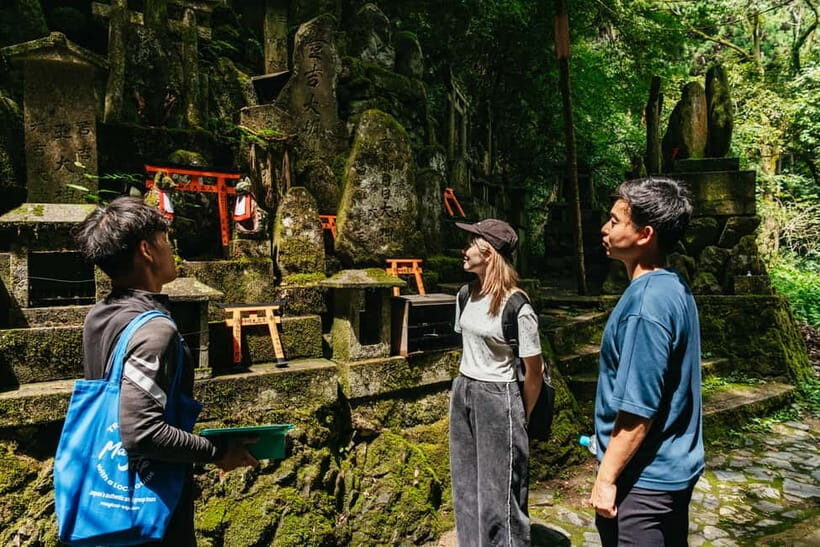
The other big win is how the guide helps you connect the dots. You’ll hear narration about Japanese history, culture, and Shintoism while you walk, so the gates and shrines don’t feel like random backdrops. I like experiences where the story lands while you’re actually standing in front of it.
Yes, it’s still Fushimi Inari, and you will still recognize the famous scenes. The difference is that you get more time with the place itself, not only the line for it.
A few more Kyoto tours and experiences worth a look


Meeting point, timing, and how the 3 hours flows
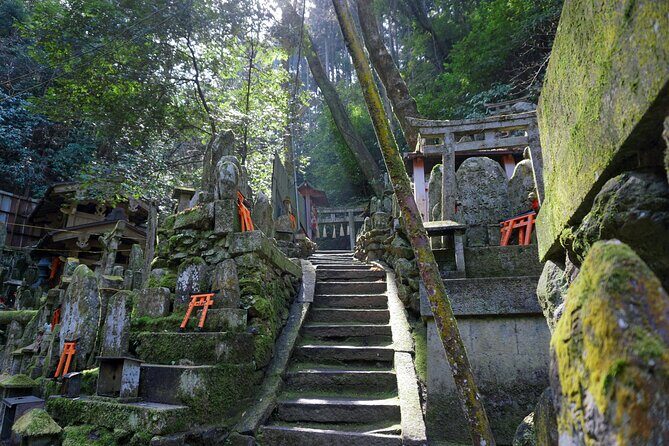
This private tour starts at 8:30 am at FamilyMart Nakai Tofukuji, 12-chōme-232 Honmachi, Higashiyama Ward. You’ll finish at the Romorn Gate area at Fushimi Inari Taisha, just before the Main Hall, at 68 Fukakusa Yabunouchichō, Fushimi Ward.
It runs about 3 hours total, and the pacing is built around viewpoints plus shrine time without rushing you into photo chaos. You’ll get a stop on the way up, then spend time at Fushimi Inari Taisha with the hike shaping what you see.
Also, no hotel pickup or drop-off is included. If you’re staying in central Kyoto, plan to reach the meeting point using public transportation. Since it’s near transit, it’s usually straightforward, but you’ll want to be on time because the tour is private and starts at a specific hour.
Stop on the way up: Tofuku-ji views before the shrine climb
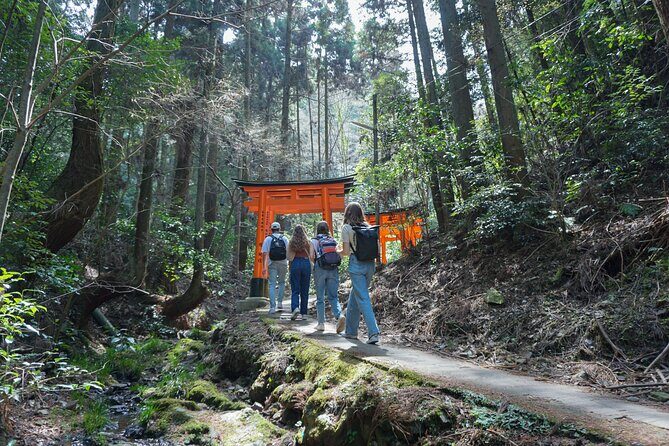
Before you’re surrounded by torii gates, you get a Kyoto viewpoint moment: on the way up to Mount Inari, you’ll enjoy sights of Tofuku-ji. Tofuku-ji is one of Kyoto’s Five Great Zen Temples, and the guide’s framing helps you understand why it matters in the bigger Kyoto story.
This stop works because it breaks the day into two layers. First, you see how Kyoto’s major temple culture sits in the landscape. Then you move toward Fushimi Inari, where religious practice is expressed in a completely different visual language.
A small drawback: if you’re hoping to spend every minute only inside the torii lanes, this viewpoint time will feel like a warm-up. But it’s a smart one, because it gives context before the shrine sights take over.
Entering Fushimi Inari: vermilion torii, bamboo, and Senbon Torii
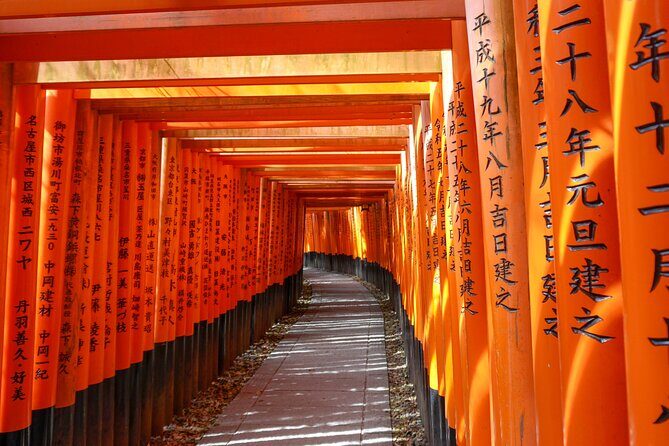
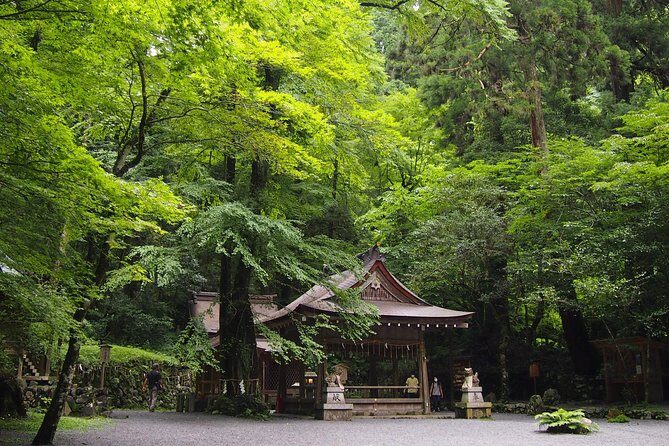
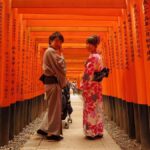
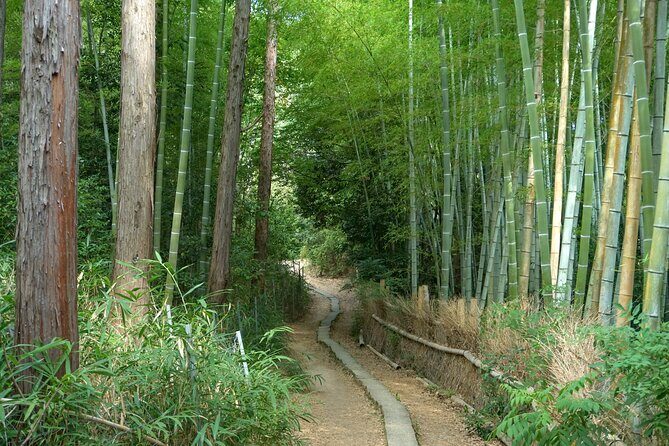
Once you reach Fushimi Inari Taisha Shrine, the route eases you into the experience. You’ll pass through vermilion torii gates and wild bamboo groves along mountain paths, before continuing toward the iconic Senbon Torii Gates.
This section is where the atmosphere changes. The torii aren’t just pretty here; they create a tunnel-like sense of movement. The bamboo gives a quieter sensory break, so even if you’ve been to shrines before, this feels different because the landscape helps the story.
Timing matters, and the private guide helps you keep your momentum. You’re not trying to guess where the quieter lanes are or hoping you’ll stumble into the right direction. The guide leads, you focus on walking comfortably and getting the photos you want.
The shrine time is listed as about 2 hours, and the good news is admission ticket is free for that part of the experience.
The quieter Mt. Inari hike and Shinto explanations on the way
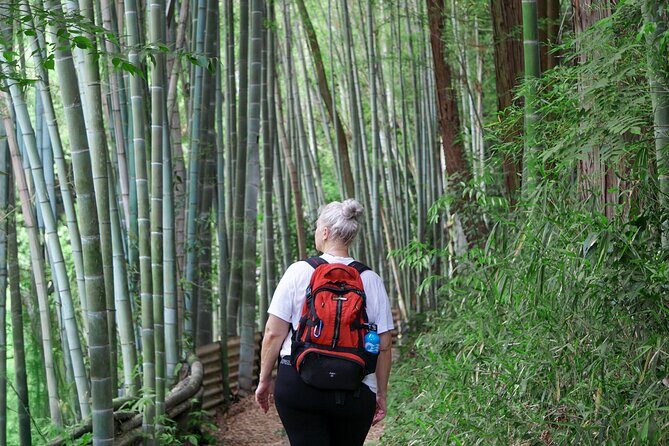
The core idea of this tour is simple: you’ll step away from the main tourist routes and spend more time on the quieter Mt. Inari trails. That matters because Fushimi Inari can get crowded in the peak flow, and the famous torii lanes can feel less magical when you’re stuck behind other people.
With a guide, you get two benefits at once:
- You avoid the stress of navigation.
- You understand what you’re seeing as you move through the mountain paths.
Shintoism comes through in the narration. Even if your Japanese is limited, you’ll get explanations in English on the meaning behind the shrine spaces and the cultural history tied to them. The result is that the walk feels intentional, not just scenic.
This is also where the guide’s flexibility shows up. One of the most useful details from real experiences here is that the route can still be enjoyable in rain. In rainy weather, the guide has taken people to the quieter areas, so the experience stays different from the usual crowded entry experience. If the forecast looks rough, that adaptability is a real value.
Other private tours in Kyoto






Approaching the main shrine area without the usual scramble
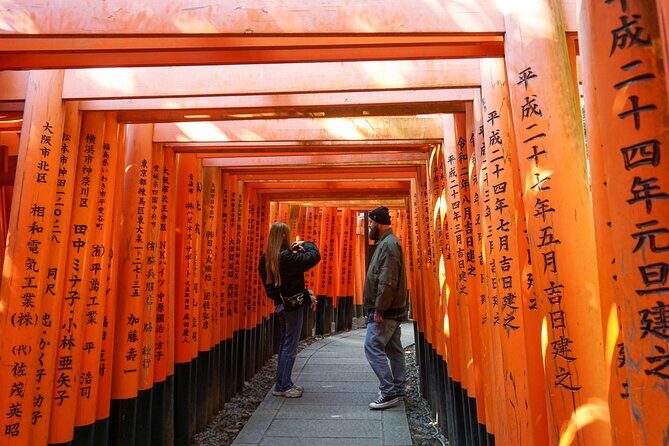
Even though the tour emphasizes quieter paths, you still end up at the heart of Fushimi Inari. The tour concludes at the Romon Gate, just before the Main Hall. That’s the moment where most people want to be, and it’s the part that anchors your hike.
What I like about finishing here is that you don’t have to decide your own turnaround point mid-hike. You’re guided to the exact endpoint, and the walk feels like a complete arc: up to the torii and shrine experience, then down with views.
One consideration: if your dream version of this tour is to spend a long time lingering inside every shrine corner, a 3-hour total means you’ll be doing more moving than wandering. For many people, that’s perfect. For ultra-slow shrine lovers, you might want more unstructured time in your own schedule after the tour ends.
Coming back down with Fushimi Momoyama Castle views
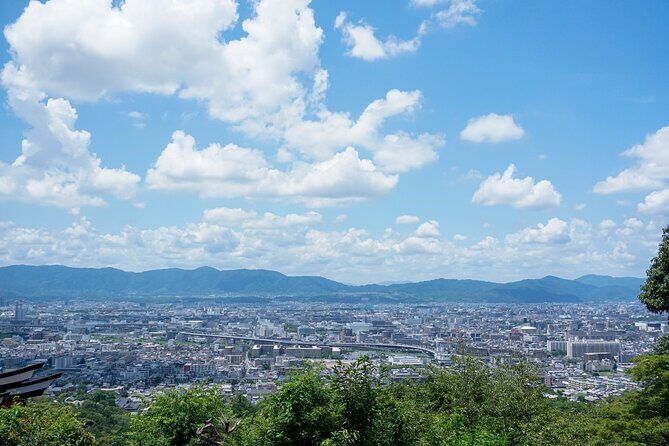
On the descent, you get a different kind of reward. From the mountainside, you’ll enjoy scenic views of Fushimi Momoyama Castle.
This is a great counterpoint to the orange torii walls. Instead of just repeating the most photographed section, you get a wider landscape feeling, which helps you reset after the shrine focus. It’s also a nice reminder that Kyoto’s history isn’t only about one religious site. The mountain route links different chapters of the city.
The only catch is that views require steady walking. If you’re someone who wants lots of time to stand and stare for long stretches, you’ll still get good moments, but the tour is designed to keep moving through the hike.
DSLR photos included: when to use them and why it’s worth it
This tour includes complimentary photos taken with a DSLR camera, shared after the tour. That’s not a throwaway perk. In practice, it saves you the common problem at Fushimi Inari: you’re busy juggling your camera while also walking in a tight path.
A private guide also helps with photo timing. You’re guided through the most photogenic areas and you’re not stuck asking strangers for takes. The photos you get afterward let you focus on being present during the walk, then enjoy the results later without obsessing over every shot.
If you care about photography even a little, this is a solid inclusion for the price. And if you don’t, it’s still a quality-of-life upgrade because you get photos without dealing with self-timer angles on a slope.
Price and value: does $62.26 make sense for this private hike?
At $62.26 per person for about 3 hours, this is not a budget group tour price. You’re paying for something specific: a private, English-speaking local guide based in Kyoto, plus narration on Japanese culture/history/Shintoism and structured access to quieter trails.
Here’s how I think about value on experiences like this:
- You’re buying time and clarity. The guide helps you navigate and keeps you from missing the quieter lanes.
- You’re buying reduced hassle. No hotel pickup, no ticket complexity, but you get direct meeting and endpoint guidance.
- You’re buying photos. DSLR photos shared after the tour is a tangible add-on.
If you’re traveling as a small group and you want less crowd friction, private pricing often feels fair. If you’re on a tight budget and happy to follow signs on your own, you could recreate parts of this route independently. But you would lose the English narration and the intentional quiet-route strategy.
For many people, the sweet spot is this: you’re willing to pay for a calmer experience at a site that’s famously chaotic when you do it alone.
Who this Kyoto Fushimi Inari hike is best for
This tour fits best if you want:
- A calmer Fushimi Inari experience with fewer crowds
- A guide who explains Shintoism and history in English
- Better photos without managing the camera the whole time
- A moderate hike that still feels efficient in a half-day window
It’s also a good fit if you’re the kind of traveler who likes walking tours but hates getting lost. The private guide removes that stress.
If you’re someone who prefers totally free roaming with no structure at all, you might find the set route limiting. And if your walking ability is limited, you’ll need to honestly judge the moderate physical fitness requirement before booking.
Practical tips so your hike goes smoothly
A few things I’d plan around based on how the tour is designed:
- Wear shoes you trust on mountain paths. You’re walking through torii lanes and up/down trails.
- Bring layers. Even in good weather, shrine-mountain air can feel different as you climb.
- Plan for no food included. The tour does not list food and drinks, so having a snack or planning a meal around the end time is smart.
- Expect weather to matter. The experience notes it requires good weather, and if it’s canceled for poor weather, you’ll be offered another date or a full refund.
If you’re curious about what rainy weather experience can be like, real experiences here suggest the guide can still steer you toward the quieter areas, which helps the day feel worthwhile even when the forecast is not perfect.
Should you book this hidden hike at Fushimi Inari?
Book it if you want a quieter, guided Fushimi Inari with real explanation, not only photos. The combination of private navigation, Shinto narration, and DSLR photos makes it feel like a thoughtful package rather than a simple walk-through.
Skip it if you’re mainly chasing a long unstructured shrine wander, or if paying for private guiding doesn’t fit your budget. You may enjoy the area on your own, but you’ll likely miss the quieter trails and the context that turns gates and paths into something you understand.
If you’re aiming to see Fushimi Inari in a way that feels calmer and more meaningful, this is a strong choice.
FAQ
How long is the private Kyoto Fushimi Inari Hidden Hike?
The tour lasts about 3 hours.
What is the meeting point for the tour?
The meeting point is FamilyMart Nakai Tofukuji, 12-chōme-232 Honmachi, Higashiyama Ward, Kyoto.
Where does the tour end?
The tour ends in front of the Romon Gate, just before the Main Hall of Fushimi Inari Taisha.
What time does the tour start?
The start time is 8:30 am.
How much does the tour cost?
The price is $62.26 per person.
Is this tour private or shared?
This is a private tour/activity. Only your group participates.
What is included in the tour?
Included items are a private tour, an English-speaking local guide, English narration on Japanese culture/history/Shintoism, visits to quieter Mt. Inari trails away from the main tourist paths, and complimentary DSLR photos shared after the tour.
Is admission included?
Admission for the shrine time is free as listed for the main stop portion of the route.
Is food or drink included?
No. Food and drinks are not included.
What if the weather is bad?
The experience requires good weather. If it’s canceled due to poor weather, you’ll be offered a different date or a full refund.
Is there free cancellation?
Yes. You can cancel up to 24 hours in advance for a full refund.