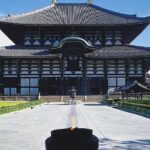
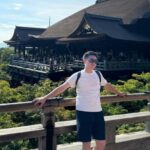
Kyoto days feel like a puzzle. This private car tour turns it into a smooth route with an English-speaking driver, so you can focus on temples, streets, and photos. I especially liked the air-conditioned vehicle for a long day and the meet-and-greet pickup that keeps you from wasting time figuring out trains and bus connections.
The other big win is how much ground you can cover in one day. You’ll hit famous Kyoto sights like Arashiyama and Fushimi Inari, plus palace and castle stops, without the stress of navigation. One thing to consider: this is primarily an English-speaking driver/guide format, so the depth of explanations can vary by driver, and the itinerary is packed enough that some stops feel like fast walk-throughs.
In This Review
- Key Things I’d Pay Attention To
- Why a Private Car Day Works Best for Kyoto (and the rest of Kansai)
- Pickup, Drop-Off, and How Easy This Feels on Day One
- The Value Question: Is $650.30 per Group Actually Fair?
- Arashiyama Bamboo Grove: the Photo Stop That Starts Strong
- Kiyomizu-dera + Kinkakuji: the Paid Temple Pair You’ll Remember
- Fushimi Inari + Gion: Torii Gates and Then a Classic Street Stroll
- Sanjusangendo + Ginkakuji: Two More Temples, Different Vibes
- Nishiki Market + Imperial Palace: Food-Plus-Photos Kyoto
- Nijo Castle + Eikando Zenrinji + Yasaka Shrine to Close the Day
- What the Driver/Guide Experience Is Like (Based on Real Outcomes)
- Flexibility: Custom Stops, Shopping Detours, and Smart Skips
- Should You Book This Kyoto Day Trip by Car?
- FAQ
- Is this tour private for just my group?
- How long is the tour?
- What’s included in the price?
- Are entrance fees included?
- Can I customize which places we visit?
- Where can the driver pick you up from?
- Does the tour include an English-speaking driver?
- What’s the cancellation policy?
Key Things I’d Pay Attention To
- Private group up to 6: you set the pace, and you’re not sharing the day with strangers.
- Air-conditioned car with pickup/drop: saves energy for temple days.
- Tight but flexible routing: many major sights, with the option to add/skip stops.
- Entrance fees are on you: several top temples have paid admission.
- Time-boxed sightseeing: plan to move efficiently and pick your must-do photos.
- Driver experience can range: some days feel very guided, others more like chauffeured sightseeing.
Why a Private Car Day Works Best for Kyoto (and the rest of Kansai)
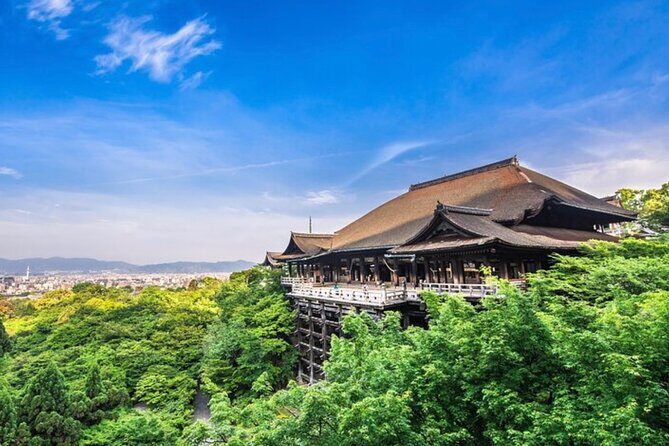
Kyoto is beautiful, but it’s also spread out. Add in crowds, winding streets, and limited time, and your day can turn into a shuffle of transfers. With a private vehicle, you skip that frustration. You tell the driver where you want to go, and the car gets you between neighborhoods while you keep your feet for sightseeing.
I also like that the day is built around recognizable, high-impact stops. You get a mix of iconic temples (Kiyomizudera, Kinkakuji, Fushimi Inari), classic street scenes (Gion, Nishiki Market), and major historical sites (Kyoto Imperial Palace, Nijo Castle). That mix matters because it gives you variety: shrine photos, scenic viewpoints, and indoor heritage without the day feeling repetitive.
The big practical trade-off is pacing. With around 10 hours total, you’re not strolling slowly from one end of Kyoto to the other. You’re doing short, focused visits—usually 30 to 60 minutes per stop. If you love lingering, you’ll want to choose fewer priority places and skip the rest, or you’ll risk feeling rushed at the places you most wanted to absorb.
A few more Kyoto tours and experiences worth a look

Pickup, Drop-Off, and How Easy This Feels on Day One
This tour is designed around convenience. You can be picked up from your location in Osaka, Kyoto, Kobe, or Nara, including Kansai Airport and the Osaka cruise terminal. That matters if you’re on a ship day, arriving late, or staying somewhere awkward for public transit connections.
You also get meet-and-greet, which helps when you’re tired and jet-lagged. Instead of searching station exits or guessing which van is yours, you’re directed to the right car and off you go. The transport is private—so it’s not a shared shuttle that forces you to wait on other groups.
One small logistics thing to remember: entrance fees are not included (more on that soon), so you’ll want a simple plan for cashless payments and ticket lines. Also, you may want to clarify your exact start location early—especially if you’re staying near a busy shopping area where pickup can be tricky.
The Value Question: Is $650.30 per Group Actually Fair?
At $650.30 per group (up to 6), this isn’t a budget option. But it can be good value if you’re traveling as a small group (family, friends, or a pair plus extras) and you’d otherwise pay for multiple taxis or spend half a day lost in transit.
Here’s what you’re paying for, in plain terms:
- Private car for your group
- English-speaking driver/guide cost included
- Highway toll, gas, and air-conditioned comfort
- Pickup and drop-off included
- Mobile ticket for the experience
If you’re a solo traveler, the price feels heavier because you’re essentially buying the whole vehicle. If you’re 3–6 people, the math improves fast because the car cost spreads out.
Also, the itinerary is structured so you can pack in major sights without paying separate private guide fees at each location. That doesn’t erase entrance costs, but it reduces the “hidden” costs of lost time, transfers, and taxis between distant neighborhoods.
A quick reality check: because the schedule is packed, you’ll get more value if you can commit to moving efficiently. If your group wants long sits in gardens, long shopping loops, and slow temple walks, you may not use every planned stop—so the skip option becomes your friend.
Arashiyama Bamboo Grove: the Photo Stop That Starts Strong
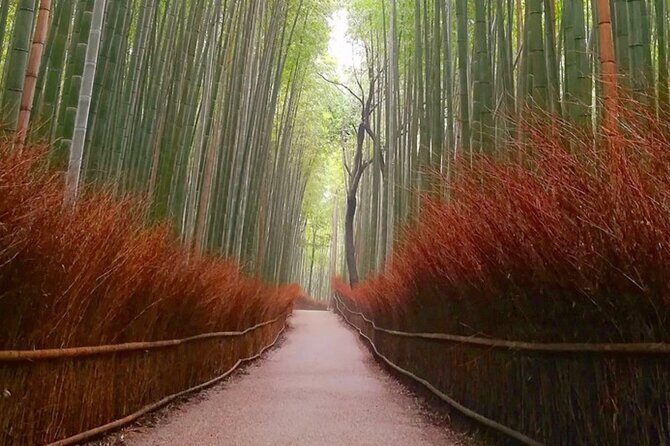
Most Kyoto days need a dramatic opener, and Arashiyama delivers. You’ll spend about 30 minutes at the Arashiyama Bamboo Grove area. The grove is the headline, but the neighborhood also has temple and river views nearby, so even a short stop feels scenic.
Practical tip: bamboo grove timing is everything. In a short visit, your goal is to get the best angles without wandering too far. Keep your camera ready, and think about your route inside so you’re not backtracking when the line or crowd flow shifts.
Admission for this stop isn’t included, so if you want it, factor in the ticket line. If you’re traveling with kids, this is a good “energy reset” stop because it’s instantly engaging and easy to explain as a must-see.
The only downside is that 30 minutes goes quickly. If your group wants extra time for nearby viewpoints or a calm walk, you’ll need to swap priorities or use your flexibility to reduce another stop later in the day.
Kiyomizu-dera + Kinkakuji: the Paid Temple Pair You’ll Remember
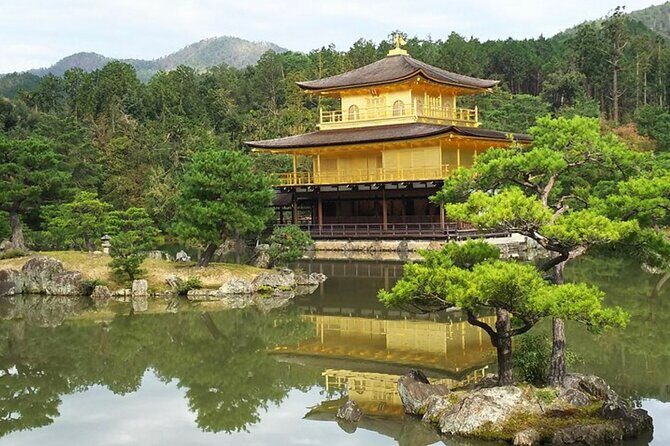
This part of the day is where Kyoto’s visual wow-factor really shows. You’ll visit Kiyomizudera for about 1 hour, then head to Kinkakuji for about 40 minutes.
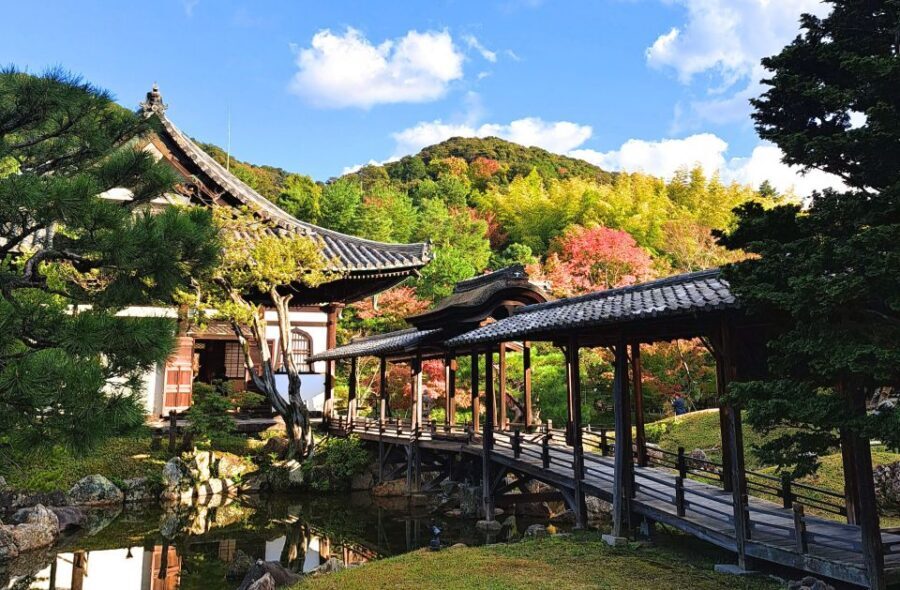
Kiyomizudera is famous for its monumental temple complex and dramatic hillside setting. The admission fee listed is 400 yen for adults (and 200 yen for students). Because it’s a major attraction, you should expect lines and slow movement in key viewing areas. Your time box is long enough to see the main viewpoints, but not long enough for deep wandering.
Then comes Kinkakuji (the Golden Pavilion). You’ll get about 40 minutes, which is tight but workable if you focus on the main angles quickly. Admission is listed as 500 yen for adults. The pavilion is the star, and most of your time should go toward viewing it from the key spots rather than trying to cover every corner.
What I like about pairing these two stops on the same day is contrast. Kiyomizudera gives you the hillside temple feel; Kinkakuji gives you a polished, iconic form that photographs instantly. It also helps you keep momentum: if your group gets tired, the next stop is different enough to keep interest up.
Consideration: because both are paid and both can be crowded, you’ll get more satisfaction by deciding where you want to stand for photos before you arrive.
A few more Kyoto tours and experiences worth a look


Fushimi Inari + Gion: Torii Gates and Then a Classic Street Stroll
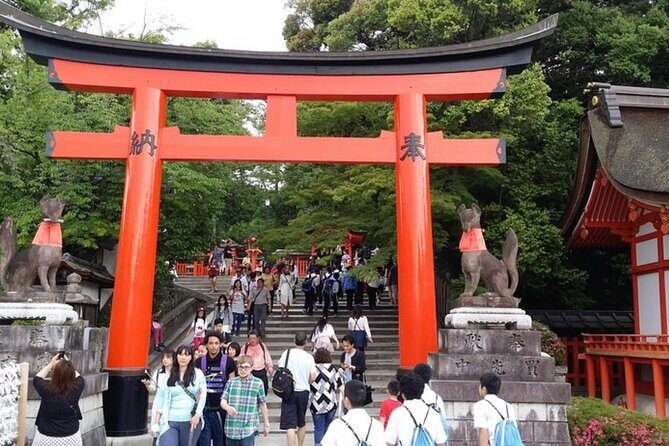
Next you’ll visit Fushimi Inari-taisha for about 40 minutes. This is the torii-gate shrine experience that many people dream about: thousands of vermilion gates creating paths into the hillside. The big practical challenge is that it’s easy to lose time climbing deeper than you planned.
In a 40-minute slot, I recommend a simple strategy: pick one or two key sections of the gate pathway and enjoy the walk without aiming for the farthest points. You’ll still get the iconic look without burning your schedule.
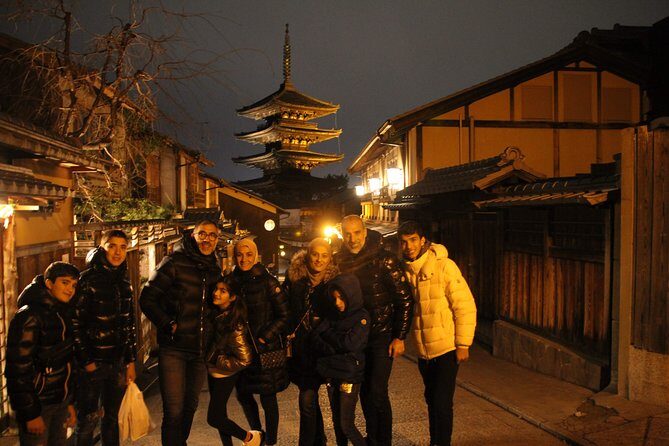
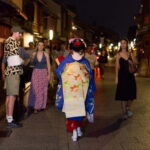
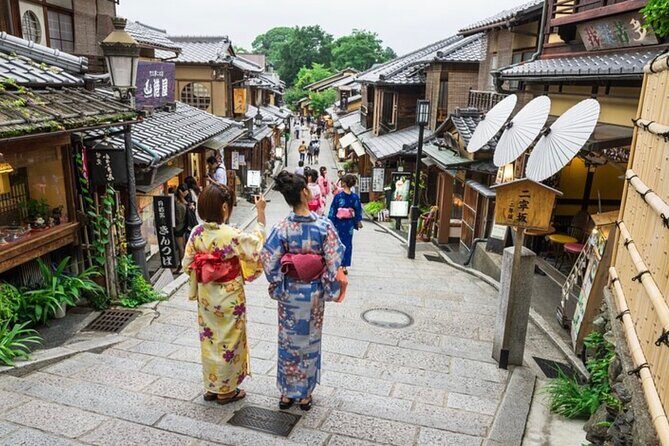
Then you’ll move to Gion for about 30 minutes. Gion is Kyoto’s famous geisha district area, full of traditional shops and teahouse streets. In a short visit, it’s best used for strolling and atmosphere—snack stops if you want, quick photo angles, and letting your brain switch from shrine mode to street mode.
Admission isn’t listed for these areas in your plan, but remember that crowd density can change quickly. If you want calmer walking, be ready to adapt your route if a bottleneck forms.
Sanjusangendo + Ginkakuji: Two More Temples, Different Vibes
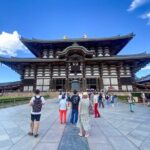
After Gion, you’ll head to Sanjusangendo Temple (about 40 minutes). This temple is known for 1001 statues of Kannon, the goddess of mercy. That detail matters because it changes how you should look at the space: you’re not just sightseeing the building—you’re visually tracking a large collection.
If your group likes “specific” facts (instead of general temple vibes), this is a good stop. You’ll feel like you’re seeing something uniquely Kyoto rather than another photogenic yard.
Then you’ll visit Ginkakuji for about 1 hour (often called the Silver Pavilion). This is a Zen temple with a famous retired-villa legacy, and it feels calmer than the most crowded mega-stops. The hour slot helps because you can slow down here more than you can at the heavily time-compressed attractions.
What I like about this pairing is tonal balance. Sanjusangendo is concentrated and visually “busy,” while Ginkakuji gives you a steadier pace to reset.
One drawback to watch for: if your group feels temple fatigue, you may want to keep your viewing plan tight at Sanjusangendo and save deeper time for Ginkakuji.
Nishiki Market + Imperial Palace: Food-Plus-Photos Kyoto
Next is Nishiki Market Shopping District for about 1 hour. This is one of Kyoto’s best-known market streets, originally known as a fish market during the Edo period. In practice, it’s a lively place for snacks, small souvenirs, and short browsing loops.
In an hour, the market works best if you decide what you want before you get lost in the choices. If you love trying small bites, this stop is perfect. If your group wants fewer calories and more strolling, pick a couple of snack targets, then move on.
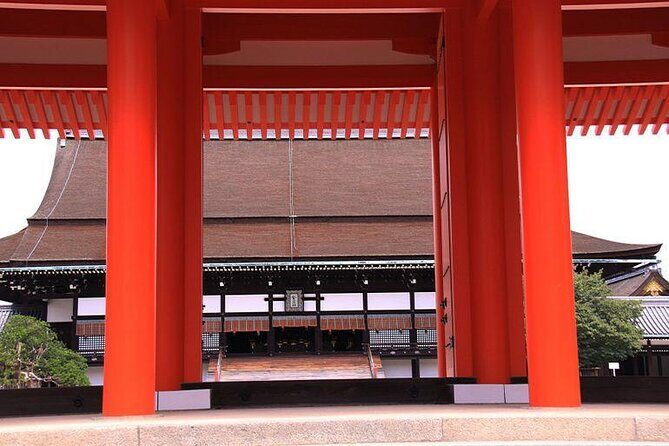
Then you’ll visit Kyoto Imperial Palace for about 1 hour. This is where the capital’s imperial story becomes tangible. You’ll learn the timeline logic of why Kyoto mattered, even though Japan’s political center later shifted to Tokyo. If you like structure and formal spaces, this stop is a good mental shift from shrine textures and market noise.
Because both Nishiki Market and the Imperial Palace can involve walking in different ways, it’s smart to wear comfortable shoes. The tour won’t kill your feet, but you’ll be on them more than you expect.
Nijo Castle + Eikando Zenrinji + Yasaka Shrine to Close the Day
Your afternoon ends with a classic trio of heritage stops:
- Nijo Castle for about 1 hour
- Eikando Zenrinji (Eikan-do) for about 1 hour
- Yasaka Shrine for about 30 minutes
Nijo Castle is tied to the Tokugawa family and the Edo period. You’ll see the kind of architecture and court-style thinking that makes Japan’s feudal era feel real. The 1-hour slot is enough to appreciate scale and key rooms, even if you can’t linger everywhere.
Eikando Zenrinji is another temple stop with a long background. This one is known for its connection to Esoteric Buddhism training beginnings and later leadership. With about an hour, you’ll have time to look around without sprinting.
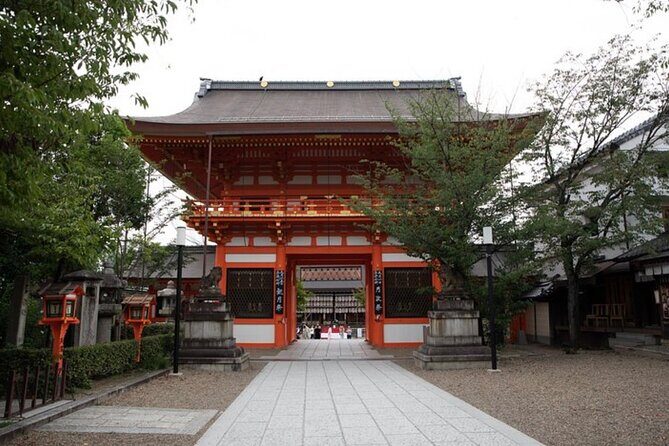
Finally, Yasaka Shrine closes things for about 30 minutes. The shrine’s long history is part of what makes it feel like a living Kyoto landmark, not just a one-time photo spot. Ending with Yasaka is a good “last walk” choice because it gives a calm, grounded feeling before you get back into transit.
One pacing note: three heritage stops in a row can feel like a lot. Your best move is to treat them as “selective depth” visits—pick what each place is for your group, then move.
What the Driver/Guide Experience Is Like (Based on Real Outcomes)
The biggest difference between a great day and a merely okay one is communication. Some people found the tour to feel like a real guided walk—driver very friendly, strong English, and able to share context while also helping with photos. Others felt the day was more like private transportation than a full lecture.
Here’s how to plan for that. Since the service is described as an English-speaking driver/guide, you should expect practical navigation and on-the-ground help. If you want more storytelling detail, tell your driver what your group cares about: architecture, gardens, religion, or just photo spots and timing.
One review specifically mentioned a driver named Rana Usman who was punctual and friendly, with English that worked well and a comfort level that suited families too. That’s a good sign: the service can feel personable, not robotic.
Also, if your car comfort matters, it’s worth noting that one experience complained about engine noise. That’s not the norm in the included details (it’s air-conditioned), but it’s a reminder to speak up if you’re sensitive to noise.
Flexibility: Custom Stops, Shopping Detours, and Smart Skips
A standout feature is that the tour is described as fully customizable, with the ability to add or skip any place. In practical terms, that means you can reduce time at a stop that doesn’t grab your group and shift minutes to what does.
This flexibility is useful for two reasons:
1) Kyoto crowds and closures can shift the day fast, and
2) your group’s priorities might not match a fixed checklist.
Some people even used the flexibility for late-day shopping time. That’s a reasonable use of the private-car advantage—because you’re not locked into a tour bus schedule.
My advice: choose a “must-see list” of 3–4 items and a “nice-to-have list” of 2–3. Then be ready to swap. You’ll enjoy the day more when you can say yes to what feels right that day, not what you forced onto the calendar in advance.
Should You Book This Kyoto Day Trip by Car?
Yes, if you want an efficient Kyoto highlights day with pickup, a private car, and English support, especially for groups up to 6. It’s a solid choice when you’d otherwise lose time juggling transit or taxis.
I’d think twice if:
- your group hates tight schedules and needs long, slow visits, or
- you expect a nonstop, deep-detailed guided lecture at every stop.
If you’re flexible—comfortable with moving at a steady pace—you’ll likely love how much Kyoto you can see in one day without the stress. For many visitors, that trade feels worth it.
FAQ
Is this tour private for just my group?
Yes. It’s a private tour/activity, and only your group participates.
How long is the tour?
The duration is about 10 hours.
What’s included in the price?
Private transportation for your group, an air-conditioned vehicle, highway toll and gas, the driver/guide cost, pickup and drop-off, meet-and-greet, and an English-speaking driver/guide.
Are entrance fees included?
No. Entrance fees and meals aren’t included, and you can skip places if you prefer not to pay admission. Kinkaku-ji and Kiyomizudera have listed admission prices, and Osaka Castle has a listed fee if you choose that option.
Can I customize which places we visit?
Yes. The tour is fully customizable, so you can add or skip any place.
Where can the driver pick you up from?
Pickup is offered from your location in Osaka, Kyoto, Kobe, Nara, or from Kansai Airport or the Osaka cruise terminal.
Does the tour include an English-speaking driver?
Yes. The service includes an English-speaking driver/guide.
What’s the cancellation policy?
You can cancel for a full refund if you cancel up to 24 hours in advance. Weather can also affect whether the experience runs, and in that case you’re offered a different date or a full refund.